
Bone Grafting & PRF/PRP Biologics for Dental Implants in Memphis
0%
3-6
4
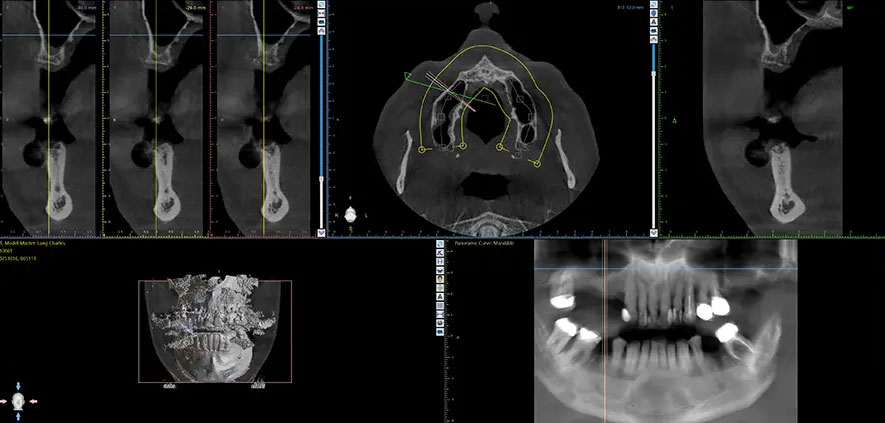
CBCT Cross-Section - Bone Deficiency
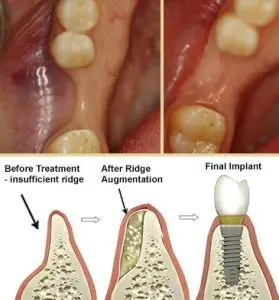
Ridge Augmentation - Clinical View
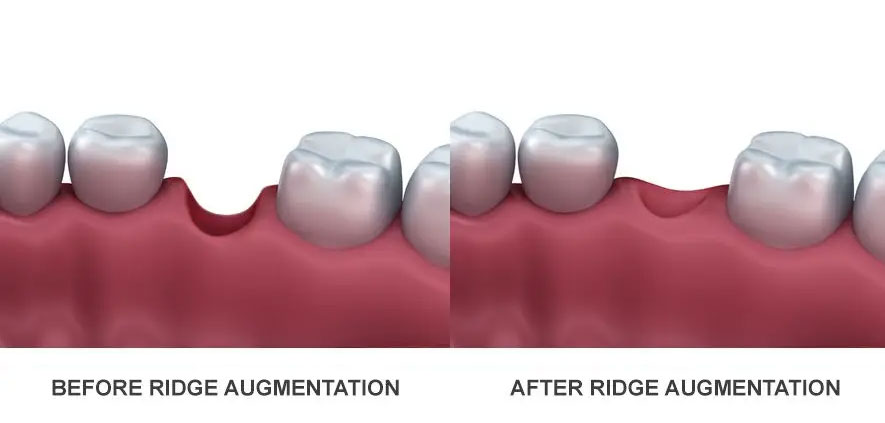
Post-Graft - Healthy Ridge
Why Bone Volume Matters for Implants
A dental implant is a titanium post that fuses to bone. For that fusion to occur — and for the implant to survive decades of chewing forces — there must be sufficient bone volume surrounding the implant at placement. Too little bone and the implant has no stable foundation, leading to failure or inability to place at all.
The problem: bone begins resorbing the moment a tooth is extracted. Within 12 months, up to 25% of bone width can disappear. Long-term denture wearers often lose dramatic amounts of bone volume over years. And certain anatomical regions — particularly the upper back jaw, where the sinus sits directly above — may simply lack the vertical bone height needed for standard-length implants.
Bone grafting solves this. It rebuilds lost bone using biological or synthetic scaffold material that your body gradually replaces with living, natural bone over 3–6 months.
Types of Graft Material
Autograft (Your Own Bone): Harvested from another site in your body (chin, jaw ramus, or for larger grafts, the hip). The highest regenerative potential of any graft material — it contains living cells that begin forming bone immediately. Requires a second surgical site, which is the primary tradeoff.
Allograft (Donor Bone): Processed cadaveric bone from a certified bone bank. Rigorously sterilized and screened for disease. Excellent clinical outcomes without a second surgical site. The most commonly used graft material in implant dentistry.
Xenograft (Bovine/Porcine): Animal-derived bone mineral, most commonly bovine. The mineral structure is biocompatible and serves as an excellent long-term scaffold. Particularly valued for volume maintenance in sinus lifts.
Alloplast (Synthetic): Man-made bone substitutes such as hydroxyapatite or beta-tricalcium phosphate. No biological source required. Good option for patients with concerns about donor or animal-derived material.
Common Bone GraftingProcedures
Socket Preservation (Extraction Grafting): When a tooth is extracted, graft material placed immediately into the socket prevents the dramatic bone collapse that otherwise follows. This simple, same-day step can eliminate or significantly reduce the need for larger grafting later.
Ridge Augmentation: For patients missing teeth for months or years, the bony ridge may have shrunk too much for a standard implant. Ridge augmentation rebuilds width and/or height using guided bone regeneration — a membrane barrier that channels bone growth while keeping soft tissue out of the graft site.
Sinus Lift (Sinus Augmentation): The maxillary sinus sits directly above the upper posterior (back) teeth. When these teeth are lost, the sinus can drop, leaving only a few millimeters of bone above the jaw. A sinus lift elevates the sinus membrane and places graft material beneath it, creating a new bone floor for implant placement. One of the most predictable procedures in implant dentistry when performed by an experienced specialist.
Peri-Implant Bone Regeneration: When an existing implant develops localized bone loss from peri-implantitis and is salvageable, bone grafting can regenerate lost bone around the implant and restore its stability. An advanced application requiring expert surgical judgment.
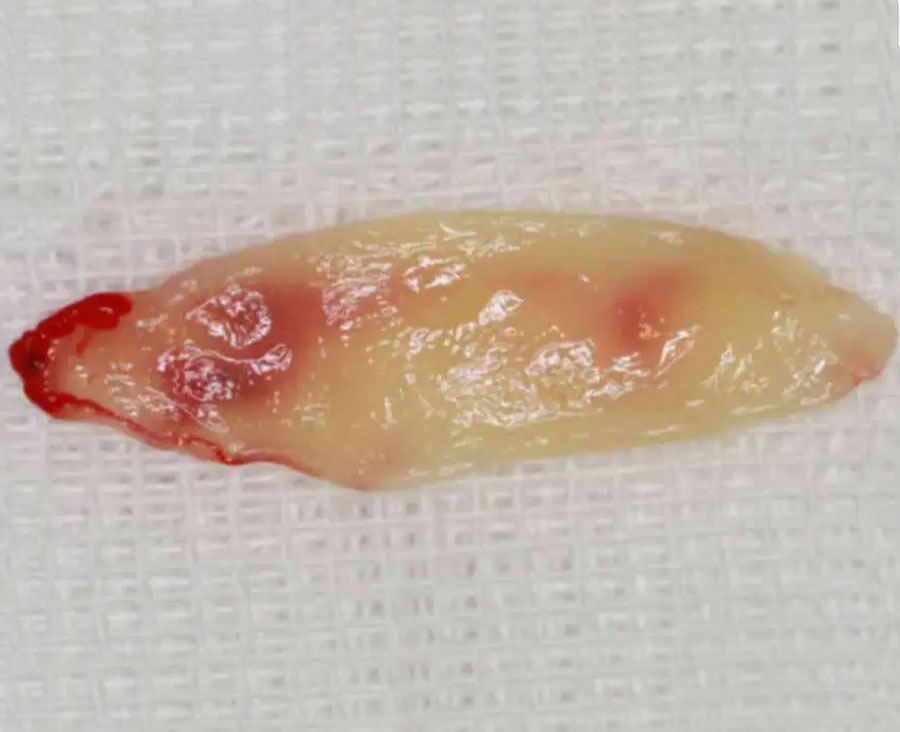
PRF Membrane - Chairside
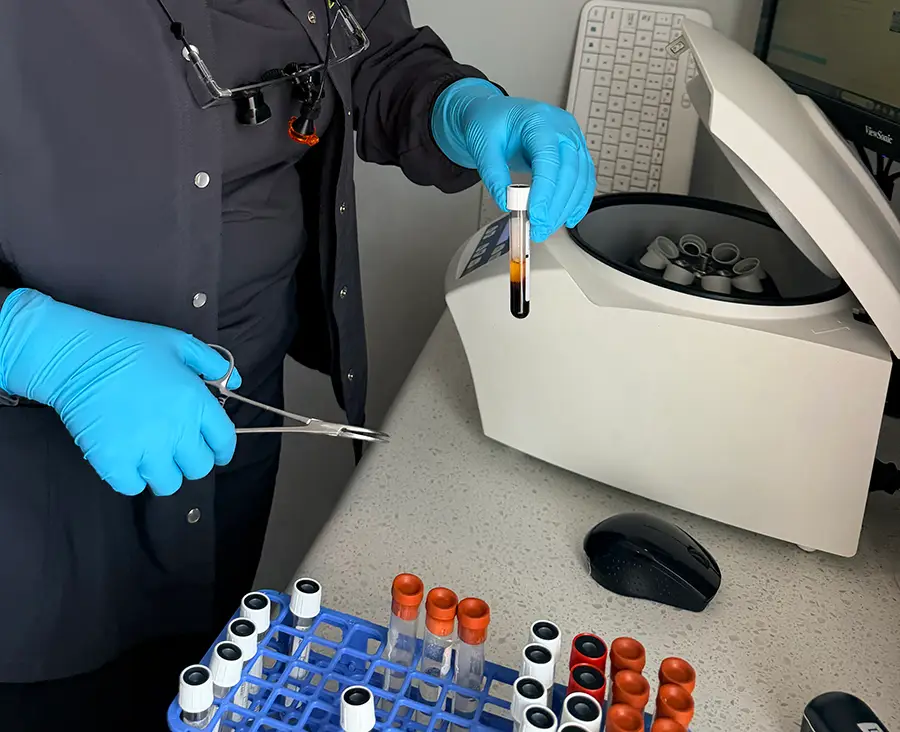
Centrifuge with Blood Tubes
PRF & PRP -Supercharging Your Graft with Your Own Biology
Platelet-Rich Fibrin (PRF) and Platelet-Rich Plasma (PRP) are concentrations of your body's own growth factors, derived from a small sample of your blood drawn just before surgery. When incorporated into or placed over a bone graft, they dramatically accelerate healing in ways no synthetic material can replicate — and with zero risk of rejection because they come entirely from your own blood.
How It Works: A few tubes of blood are drawn (like a standard blood test). The tubes are placed in a centrifuge that spins at precise speeds, separating the blood components by density. The platelet-rich upper layer — concentrated with growth factors (PDGF, TGF-β, VEGF, IGF-1) — is harvested and either pressed into a membrane (PRF) or activated into a gel (PRP). Both are applied directly to the graft site during surgery.
Accelerated Bone Formation: Growth factors signal osteoblasts (bone-forming cells) to proliferate and migrate faster. Studies show PRF-enhanced grafts produce measurably more new bone volume at 3- and 6-month follow-ups compared to graft material alone.
Faster Soft Tissue Healing: The fibrin matrix provides an immediate scaffold for new blood vessel formation and epithelial cell migration. Patients consistently report faster wound closure and less post-operative swelling than with graft alone.
Reduced Infection Risk: PRF contains leukocytes — white blood cells — that create a localized immune defense at the surgical site, reducing bacterial load and infection risk.
Shorter Overall Timeline: When healing is accelerated, implant placement can sometimes proceed sooner — compressing the overall treatment timeline. For patients who have been living without teeth, even weeks matter.
How long does bone grafting add to my treatment timeline?
Simple socket preservation grafts add no additional appointments — they are performed at the time of extraction. Larger ridge augmentation or sinus lift grafts typically require 4–6 months of healing before implants can be placed. PRF/PRP can sometimes shorten this window by accelerating new bone formation.
Is bone grafting painful?
The procedure is performed under local anesthesia (and sedation if desired), so intraoperative discomfort is minimal. Post-operative soreness is typically manageable with prescribed or over-the-counter medication and peaks within 2–3 days. Sinus lift procedures may involve additional days of mild pressure or congestion-like discomfort in the cheek area.
If I need a bone graft, does that mean I can't get implants?
No — a bone graft requirement means you need a preparatory step before implant placement, not that implants are off the table. Bone grafting is one of the most routine preparatory procedures in implant dentistry. The vast majority of patients who require grafting proceed successfully to implant placement after healing.
$3,500 – $6,000
$4,500 – $8,000
$5,000 – $9,000
Why Memphis Area Patients Choose Dr. Adatrow
For a single tooth implant, precision in both placement and crown design is everything. The implant must be placed at the ideal position and angle – not just for structural stability, but to allow proper gum tissue shaping and aesthetic crown emergence. Dr. Adatrow’s dual specialty in Periodontics (placement) and Prosthodontics (crown design) means every detail of the restoration is considered in context from the very start.
Whether you’re coming from Germantown, Collierville, Bartlett, Cordova, or anywhere else in the greater Memphis area, a single tooth implant consultation at our Southaven center is complimentary and carries no obligation.

PRF/PRP Used as Standard Practice — Not an Upcharge
At Advanced Dental Implant and TMJ Center, Dr. Adatrow incorporates PRF/PRP into bone grafting procedures as a standard clinical enhancement. Patients from Memphis, Germantown, Collierville, Bartlett & across the region benefit from this regenerative approach as part of comprehensive care.
How long does the implant procedure take?
The implant placement surgery itself typically takes 45–90 minutes. Including consultation, imaging, and the healing phase, the full timeline from first appointment to final crown is 3–6 months. If a bone graft is needed first, add another 3–4 months.
What is the success rate of single tooth implants?
Clinical studies report 10-year success rates of 95–98% for single tooth implants in non-smokers with adequate bone and good oral hygiene. Success rates decline with smoking, uncontrolled diabetes, and poor maintenance. Dr. Adatrow will identify any risk factors in your evaluation.
Will it look like my natural tooth?
Yes — with a skilled prosthodontist designing the crown. Color, shape, translucency, and surface texture are all customized to match your surrounding teeth. In Dr. Adatrow's hands, a porcelain crown on an implant is routinely indistinguishable from natural dentition even to trained observers.
Graft Types
- Autograft - your own bone
- Allograft - donor bone bank
- Xenograft - bovine mineral
- Alloplast - synthetic material
PRF/PRP Benefits
- Zero rejection risk
- Faster bone formation
- Faster soft tissue healing
- Reduced infection risk
- Shorter overall timeline
Free Bone Graft Consultation
Told You Don't Have Enough Bone? Let's Take a Closer Look.
Serving Memphis, Germantown, Collierville, Bartlett, Arlington & all surrounding communities. Many patients told "no" elsewhere find solutions here.